
When designing your perfect kitchen, picking the best worktop is a key choice. Two popular options are Quartz and Granite Worktops, both known for their beauty, durability, and lasting quality. So how can you figure out which one suits your home? In this detailed guide, we will look at the benefits, drawbacks, strength, upkeep, and style of both to help you decide .
1. Getting to Know Quartz and Granite Worktops
To compare Quartz and Granite Worktops, you first need to understand the basics of each material.
Granite is extracted in the form of slabs in quarries. The slabs are different with each displaying different colors, designs and veins which took millions of years to develop. Granite worktops are usually selected by people who love to have something natural and something authentic in their worktops made of stones.
Quartz is a man-made material. It is made by manufacturers using approximately 90 to 95 percent of natural quartz crystals combined with resins, pigments and polymers. The result of this process is a clear uniform surface that resembles actual stone and has increased quartz durability and is less hard to maintain.
2. Appearance and Aesthetic Appeal
One major factor to think about when picking between Quartz and Granite Worktops is how they look.
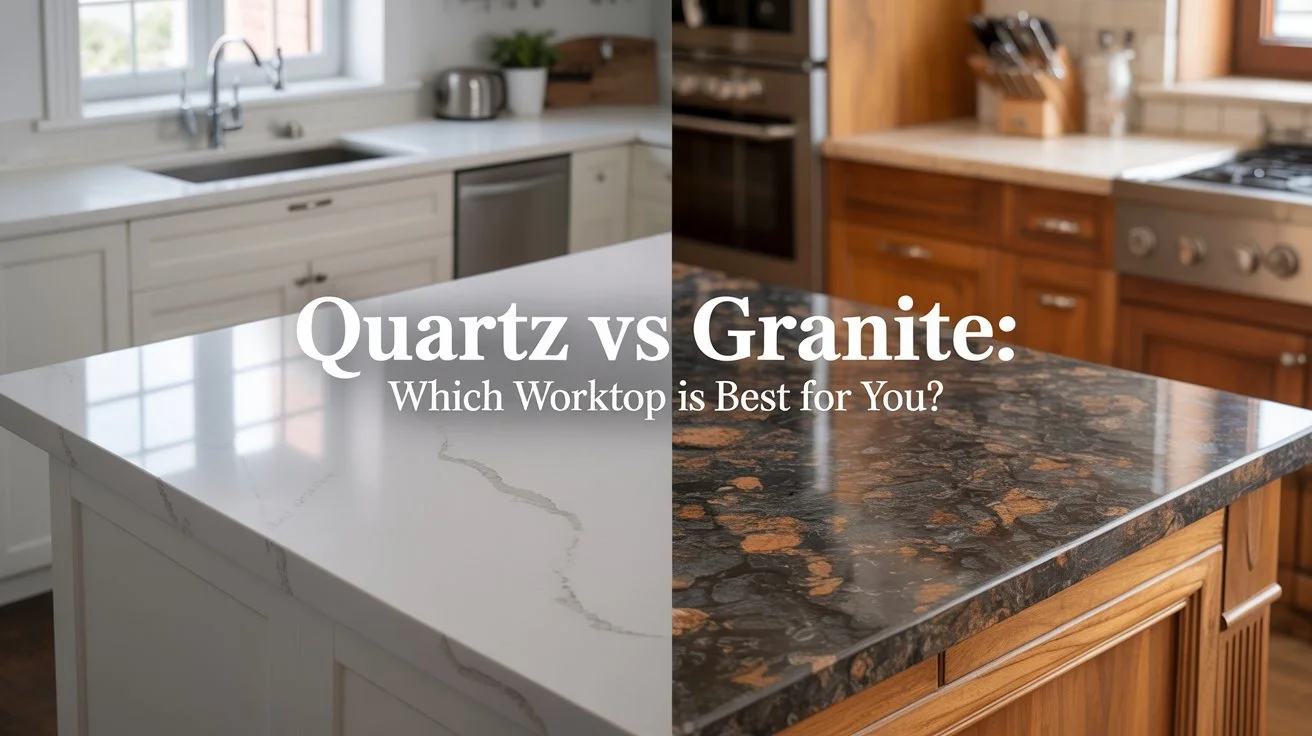
Granite worktops add a bit of beauty to nature. Each slab is a unique piece with individual swirls, specks and colour variations. Granite gives any kitchen character. Granite creates a unique and beautiful touch in your room in case you prefer natural textures having an earthly touch.
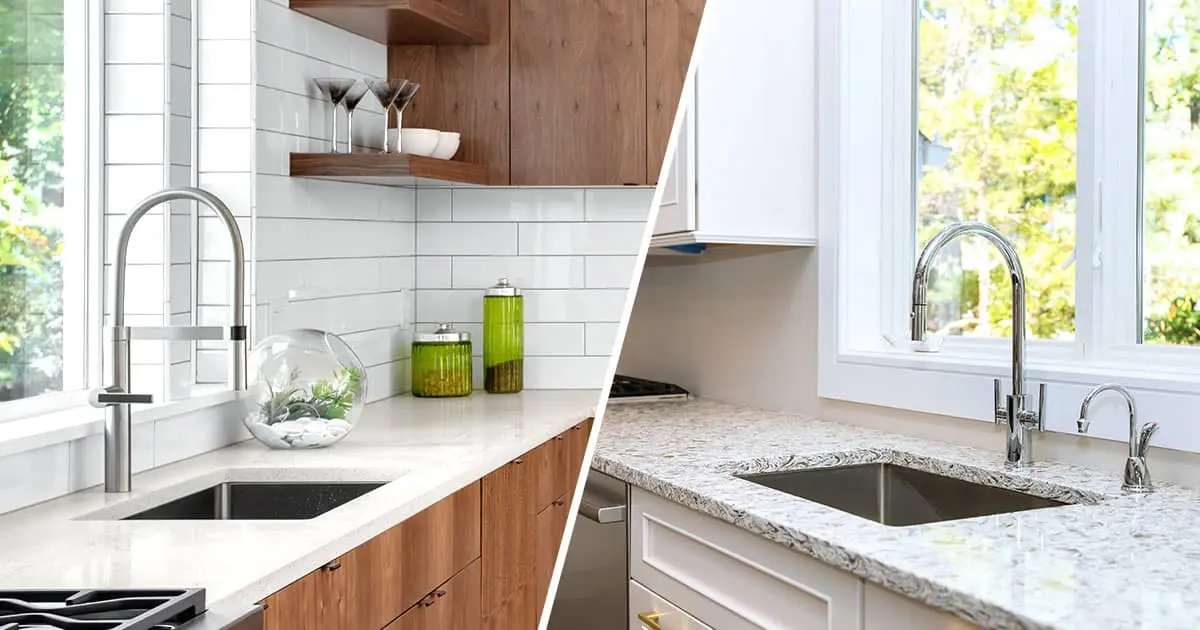
The design of quartz worktops is more uniform as it is man-made. They are available in numerous tones including light whites and greys to aggressive marble and concrete imitations. It makes quartz an excellent choice when used in a modern kitchen, where a smooth and smooth look can be valued.
To have a kitchen countertop that will fit the design of your home, quartz is more flexible in terms of design, whereas granite will bring a unique and natural look.
3. Durability and Strength
Both materials are tough and hold up well, but they differ in some important ways.
Granite is a highly hard natural rock, and is able to resist scratches, heat and daily usage. But it does have the ability to absorb liquids should it be left uncovered and this may result in stains or even allow bacteria to develop with time.
Quartz is characterized by its strength. It is not porous, so it does not require any sealing. It deals with scratches, stains and light impacts better than granite does. The resin on which quartz is bonded provides it with some flexibility. This flexibility reduces the likelihoods of it breaking when put into heavy use or when placing the installation process.
Quartz may come out a winner in the Quartz vs Granite Worktops debate as long as you are more concerned with durability and easy maintenance.
4. Care and Upkeep
A key thing shoppers think about is how much effort it takes to maintain.
Granite worktops require sealing after every year to prevent any stains as well as moisture. It is best to clean them using mild soap and water because harsh chemicals are likely to damage the sealant.
Quartz worktops have hardly any maintenance needs. This is because their surface is not porous and therefore they cannot be stained by something such as coffee, wine or oil. There is no need to close them and wiping with a soft cloth and mild cleaner keeps them looking excellent.
Quartz is different with regards to maintenance. Quartz is a viable option in case you need easy-to-clean and long-lasting kitchen countertops.
5. Heat and Scratch Resistance
Both Quartz and Granite Worktops handle heat and scratches well, but there are a few differences between them.
Granite worktops resist high temperatures and do not get damaged . They work great for people who often place hot pans or pots on the counter. Still, using trivets is a good idea to keep the polish intact and avoid sudden temperature changes that could harm it.
Quartz, while strong, cannot deal with heat as well. The resin in quartz might crack or change color if exposed to very high heat. Using heat pads can help keep the surface safe.
For scratches, both materials hold up . However, quartz has more durability because it is engineered and has a surface that is not porous.
Read Also: The Low-Down on Quartz Worktop Maintenance
6. Cost and Value to Get the Most for Your Money
The cost of Quartz vs Granite Worktops comes down to a mix of factors like how thick it is, what quality you’re going for, the design you pick, and how much it costs to install.
Granite worktops have their price decided by how rare the stone is and where it comes from. Unique colors and patterns may cost a lot more, but there are standard granite choices that won’t break the bank for those who want an elegant and natural vibe.
Quartz worktops are a bit more expensive since they’re engineered and polished to a high-end finish. Many consider the price fair because quartz lasts longer, needs any upkeep, and keeps the same look over time.
If you’re looking at value, both types make your home more attractive for resale, though quartz gives better long-term savings because it needs maintenance.
7. Environmental Impact
To think about sustainability, it helps to examine the environmental side of Quartz and Granite Worktops.
Granite being a natural stone, involves quarrying. This is an expensive process to the environment due to the extraction and shipping. Nevertheless, granite is durable, and thus it does not require frequent replacement.
The energy used in the production of quartz is also large but most of the manufacturers currently incorporate recycled material and employ green resin to reduce its effects. Quartz is durable and can withstand years which makes it one of the long time sustainable products.
If you want an eco-friendly stone worktop, both granite and quartz are good picks. However, quartz tends to have more steady and sustainable production processes.
8. Installation and Customization
The installation process has a big influence when deciding between Quartz and Granite Worktops.
Since granite worktops are very heavy and fragile, they need expert installation. Without careful handling, they might crack. After installing, they must also go through accurate sealing.
On the other hand, quartz offers more flexibility because it is simpler to cut and shape. This makes it a great fit for unique designs detailed edges, and modern kitchens. Quartz’s consistency also allows for smooth almost invisible seams creating a sleek and upscale finish.
To create customized kitchen countertops with clean seams and a polished appearance, quartz could be a smarter option.
9. Which Worktop Suits You Best?
The decision between Quartz and Granite Worktops will rely on your needs, style, and budget.
- Go with Granite Worktops if:
- You appreciate the unique and natural look of real stone.
- You are okay with doing some sealing and upkeep .
- You need excellent resistance to heat for your kitchen.
- Pick Quartz Worktops if:
- You prefer an easy-to-care-for surface with strong quartz durability.
- You like having uniform colors and plenty of design choices.
- You want something cost-effective and hygienic in the long run.
In the end, both options add luxury, durability, and timeless style to your stone worktops making them a valuable upgrade in any modern kitchen.
10. Final Thoughts
The Quartz vs Granite Worktops cannot be easily answered as they present advantages to themselves. Granite offers beauty of nature and maintains heat resistance whereas quartz offers the best durability and easy care as well as smooth modern appearance.
The question to ask in deciding between these countertops in the kitchen is how you use your kitchen on a daily basis, style desired and the amount of effort you will be comfortable with when it comes to cleaning. You can choose granite which has a touch of earth or quartz which has smooth and polished surface that will provide your kitchen with style and functionality over an extended period of time.